
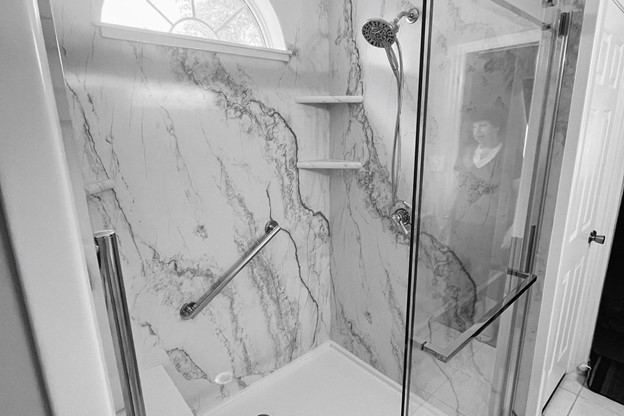
A bathroom can be safer without looking like a hospital room. The key is planning accessibility features as part of the design from the start, not adding them later as obvious fixes. A good remodel can improve comfort, reduce fall risk, and still feel warm, modern, and personal.
A tub to shower conversion is often one of the most practical ways to make that shift. If stepping over a bathtub wall feels risky, awkward, or inconvenient, replacing it with a lower-entry shower can make the bathroom easier to use without making the space feel clinical.
How can an accessible bathroom still look stylish?
An accessible bathroom looks better when safety features are built into the design instead of treated like afterthoughts. Grab bars, shower seating, better lighting, wider entry points, and non-slip surfaces can all blend into a modern bathroom if the colors, fixtures, and layout work together.
The goal is not to make the bathroom look “accessible.” The goal is to make it feel easy, comfortable, and natural to use.
Which accessibility features are worth planning first?
Start with the features that affect daily movement: shower entry, floor traction, support points, lighting, and reach. These choices matter because most bathroom frustration comes from small repeated problems, such as stepping over a tub, reaching too far for a towel, or feeling unsteady on a wet floor.
Good planning helps solve those problems quietly. A low-threshold shower, well-placed controls, built-in storage, and a secure place to sit can make the room safer without changing the whole personality of the home.
How do you avoid the “medical” look?
Avoid the medical look by choosing residential finishes first and accessibility products second. That means selecting tile patterns, wall surrounds, fixtures, hardware, and colors that feel like a bathroom you’d want to show off, then choosing safety features that match.
For example, grab bars now come in finishes that look like towel bars. Shower benches can be built in or designed to match the shower walls. Handheld showerheads can look sleek instead of institutional. The right choices make the room feel intentional, not adapted in a panic.
Is a walk-in shower better than keeping the bathtub?
A walk-in shower is often better if the bathtub is rarely used, hard to clean, or difficult to enter safely. Keeping a tub may still make sense if it’s the only bathtub in the home or if young children use it often.
This is where the decision should be practical, not automatic. If the tub is useful, keep it or refinish it. If it creates more stress than value, a tub to shower conversion can make the bathroom work better for the people who actually use it every day.
What design choices make a shower safer?
A safer shower usually includes a lower entry, slip-resistant flooring, strong support options, reachable controls, smart storage, and enough room to move comfortably. None of those choices have to look obvious.
A built-in bench can feel like a spa detail. A handheld showerhead can make cleaning and bathing easier. A recessed shelf can reduce clutter on the floor. Better lighting can make the room feel brighter while also helping someone see clearly at night.
What should homeowners ask before remodeling?
Ask questions that connect design with real use. A remodeler should be able to explain what improves safety, what improves appearance, and where those goals overlap.
Good questions include:
- Can this shower be easier to enter without looking institutional?
- Where should support bars go if we want them to blend in?
- Would a bench, niche, or handheld showerhead improve daily use?
- What materials are easier to clean and safer when wet?
- Should we refinish the existing tub, replace it, or convert the space?
Tub Doctor of Augusta helps homeowners think through these choices with services that include shower conversions, walk-in showers, full bathroom renovations, bathtub refinishing, accessibility upgrades, and handicap solutions.
Why should accessibility be planned before it’s urgent?
Most homeowners wait until the bathroom becomes a problem. That might mean a slip, a surgery, an aging parent moving in, or a daily routine that suddenly feels harder than it used to. At that point, decisions can feel rushed.
Planning earlier gives you more control. You can choose finishes you like, compare layouts, review portfolio photos, and make the bathroom safer while it still feels like a design upgrade, not an emergency fix.
How can portfolio photos help you choose the right look?
Portfolio photos help you see how safety and style can work together. Look for showers that feel open, clean, and practical. Pay attention to entry height, seating, storage, wall finishes, fixtures, and how the new shower fits the rest of the bathroom.
This step matters because accessibility should not erase style. A good remodel should make the bathroom easier to use and better to look at.
Ready to make the bathroom safer without making it look medical?
The best accessible remodel does not announce itself. It simply makes the bathroom easier to enter, easier to clean, easier to move through, and more comfortable for the people using it. If your tub is becoming a daily obstacle, a tub to shower conversion may be the right place to start.If you’re ready to compare real examples and think through what would work in your home, check our portfolio.
